
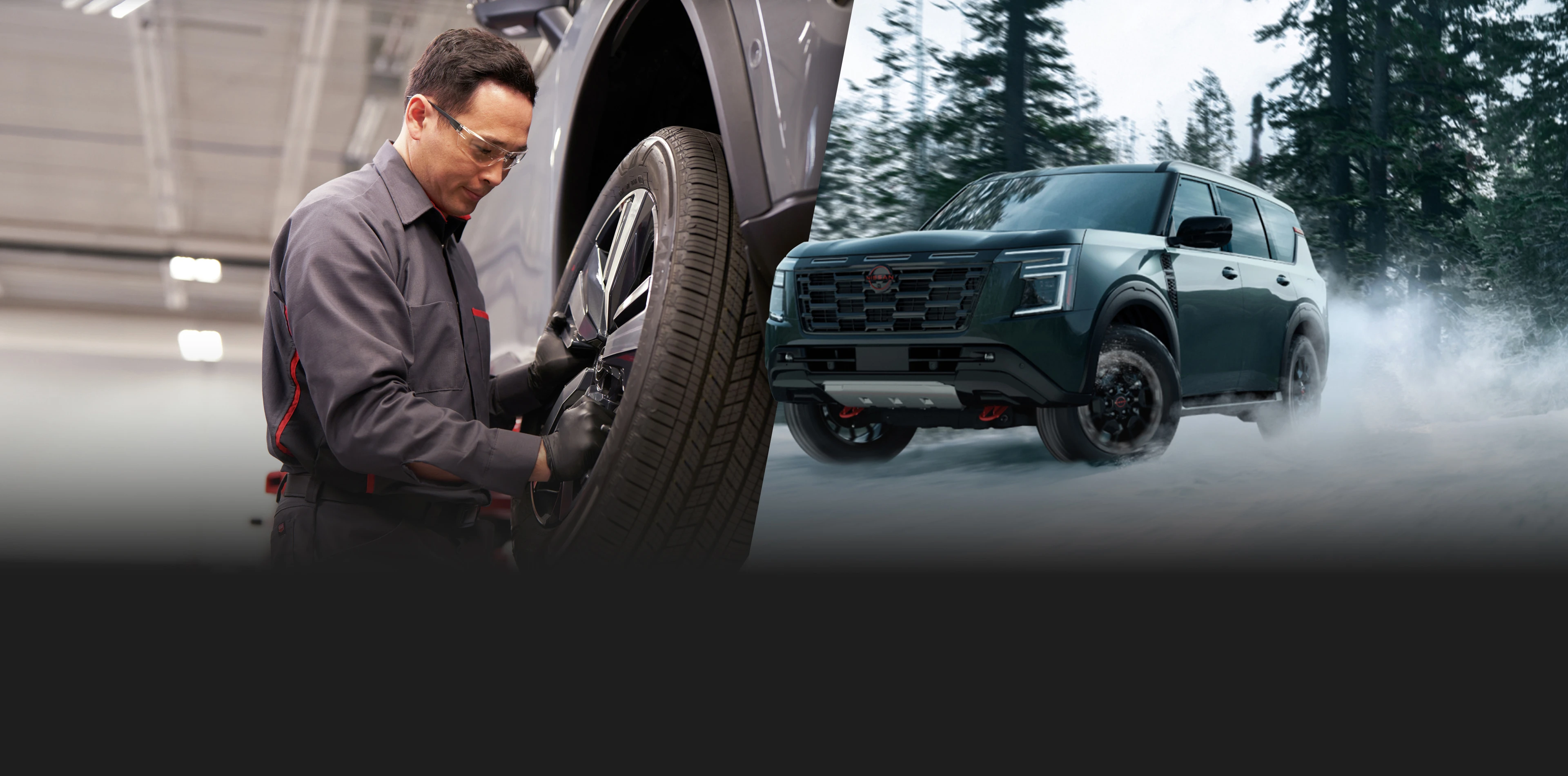
Whatever the season, stay ahead of the curve with tires engineered to deliver confident traction, comfort and handling to help you reach your destination.
Shop for TiresYour Nissan dealer carries the tire brands recommended to meet the high-quality standards of your Nissan vehicle and provide you with superb performance, comfort and handling.
Find Your New Tires
If your tires appear to be showing or developing irregular wear patterns, use this guide to identify what the issue may be or contact your service advisor to schedule a complimentary tire inspection at your local Nissan dealer.
See anything familiar? Let us take a look.
These irregular wear patterns may indicate the need for vehicle adjustment or repair. Do you see these patterns? If you do, talk to your Service Advisor today.
Not to worry. Your highly trained Nissan service experts have answered some of the most common questions they hear throughout the day.
View More FAQsPlease refer to your Owner's Manual.
Tires in different positions on a vehicle perform different tasks. Regular rotation helps tires to wear evenly, maximizes tread life and tires can be replaced in sets of four, which is preferable.
Proper tire inflation helps prevent accelerated wear that leads to premature tire replacement and has an important safety aspect as well. Tires that are driven under-inflated generate excessively high heat levels that can weaken the tire to the point of failure. At high speed, a rapidly deflating tire can cause loss of vehicle control. An over-inflated tire will result in harsh ride quality and will cause uneven tire wear.
Checking your tire pressure once a month is a best practice. Be sure the tires are cold (resting for at least three hours or driven less than one mile), and don’t forget to check your spare tire. You should always use a good-quality tire gauge to check pressure–don’t ever try to “eyeball” tires because they can look fine even when they are under-inflated. Remember that tires can lose air pressure in cold weather.